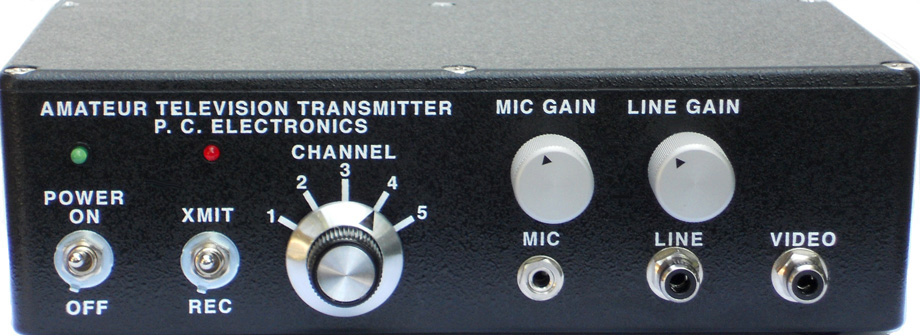
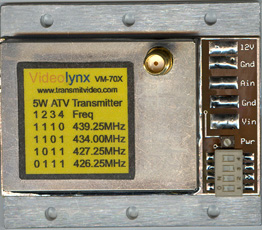
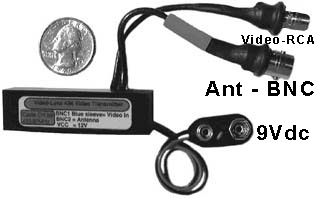
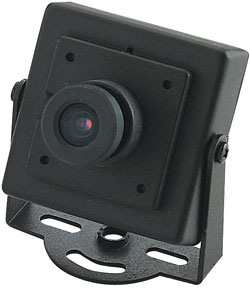
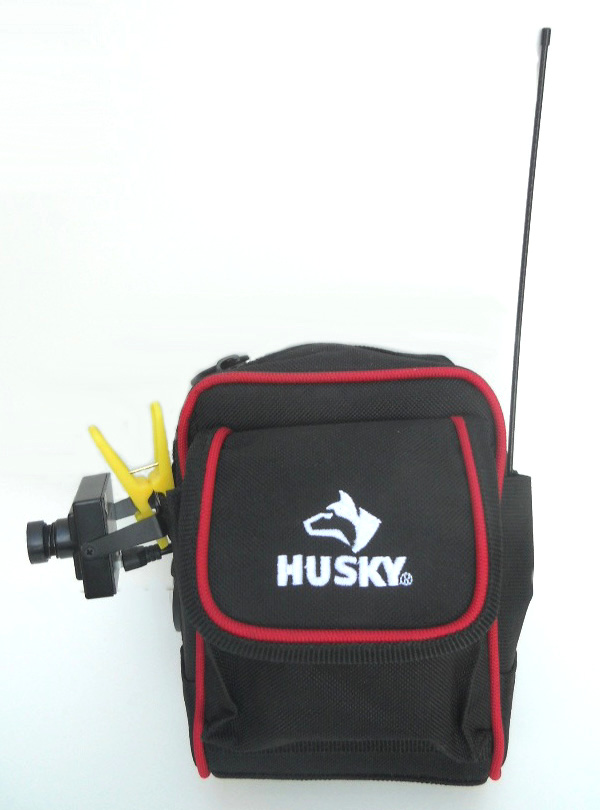
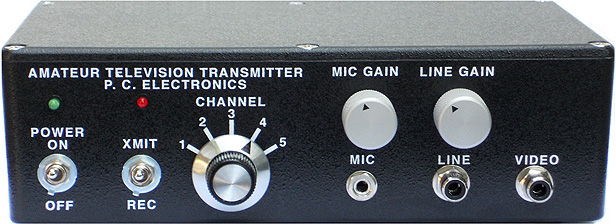
 Build your own transmitter using the Videolynx VM-70X module and TR-1b relay board. Download and see our application note which contains a parts list and sources, Hammond 1590D die cast aluminum chassis drill template, wiring schematic and more information. Basically you will be drilling the enclosure, mounting the modules, connectors, switches, etd., and doing the interconnect wiring. The FMA5 board is no longer available to add hand mic audio, but line audio from a camcorder or camera can be plugged in for sound. The Videolynx 70cm ATV transmitter modules can be ordered directly from them: the 50mW 434, 50mW 4 ch w/audio Z70A for hat cams, R/C, and demo applications for up to a half mile line of sight, and the 0-5W VM-70X as shown in the photo on the left for home stations, portable at public service events, balloons and rockets. You can even operate the VM-70X as it comes out of the box at 1/2 Watt out by soldering RCA jack to pig tail A/V cables and 11 to 13.8 Vdc power wires to the solder pads. The RF out SMA jack goes to the antenna - we have SMA to N jack adaptor. Download our VM-70X Quick Start page. If you want to adjust up the power, the module will need to be connected to a heat sink or fan as shown in this application note download.
 More Power - If you start out with the 50-100 mW 434 or Z70A transmitter module, for higher power you can add a Downeast Microwave 7025PA linear amplifier for over 20W, or build your own using one of our PA5 boards and a RA30H4047M module from RF Parts. The TX70-5s/VM-70X can be adjusted down to drive the Mirage amplfiers - D26N, D1010 or D100 ATV versions - to over 50 Watts within their linear range. Downeast Microwave linear amplifiers can also be added to our TX33-.1s 33cm and TX23-.1s 23cm band transmitters.
Over the years we have gone back and forth between having available a transceiver or a transmitter that would pair up with a downconverter. The demand has always been about 50-50. So now, since 2008 new TV's have analog cable tuners built in, we went back to stand alone transmitters. Also, you may not need a transceiver, downconverter or TV to use at the transmit location at a public service event. Some areas may only operate through a crossband repeater and very little simplex. Separate units also offer a lower entry cost to 70cm ATV since a cable ready TV can be used to receive on the 70cm ham band.
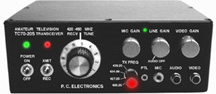 You might still be able to obtain one of our TC series 1, 10 or 20 Watt Transceivers on eBay, QRZ.com On Line Swapmeet or other used ham gear internet web sites. If you do, and it does not come with a manual, email us requesting one giving model number and any revision letter or date etched on the exciter board inside - always include your call letters when emailing us. If you need trouble shooting advice, contact us with your questions. Any of the older transmitters or transceivers may be repaired by us - assuming we have the parts - for $80 plus parts cost. See our repair policy.






















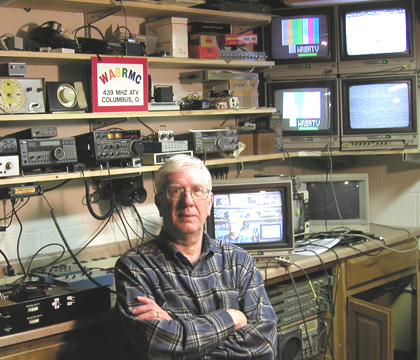
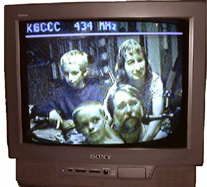
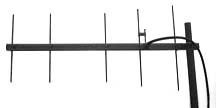
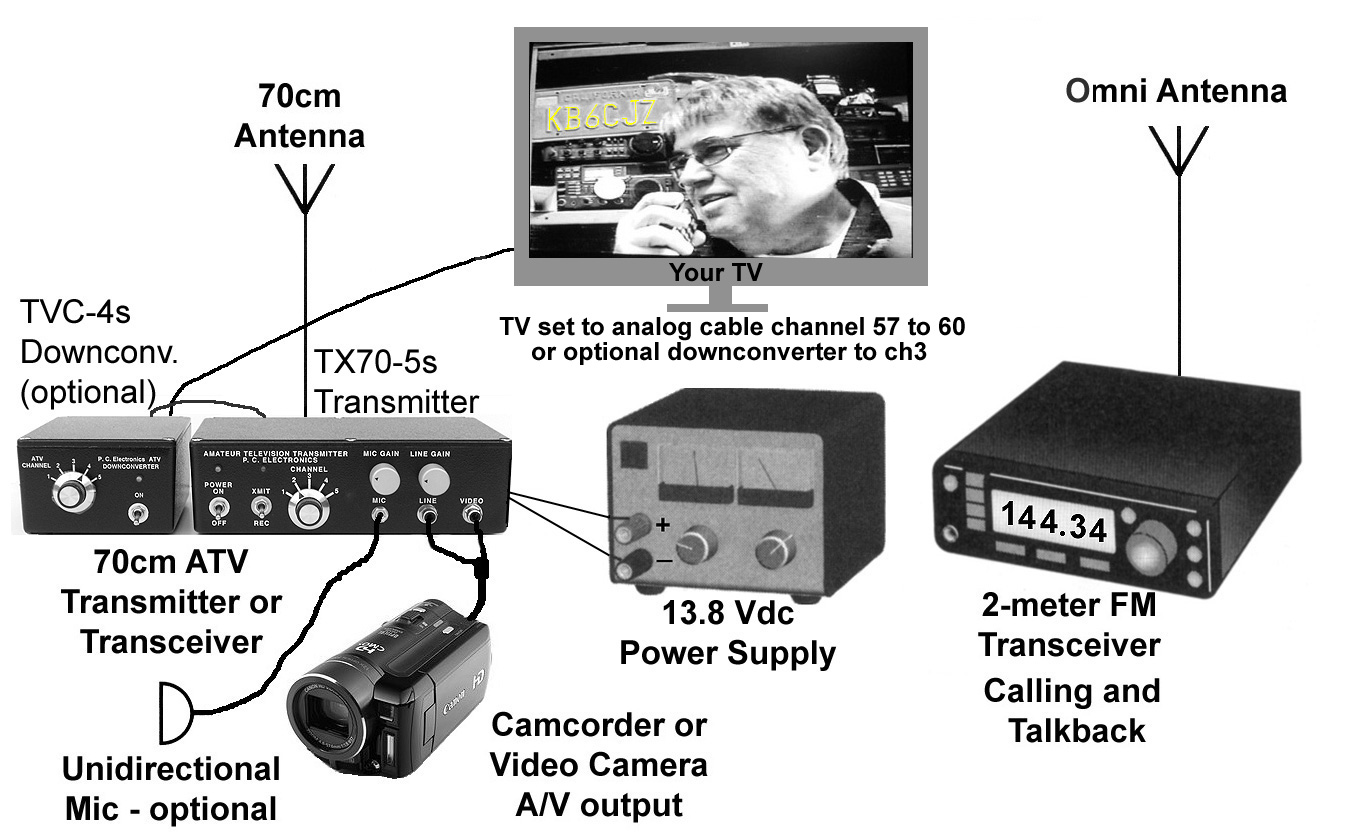
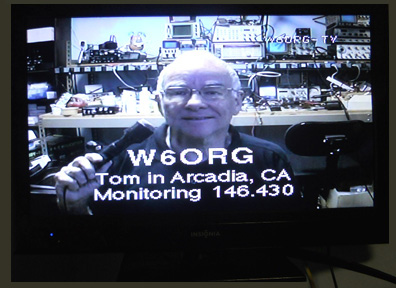
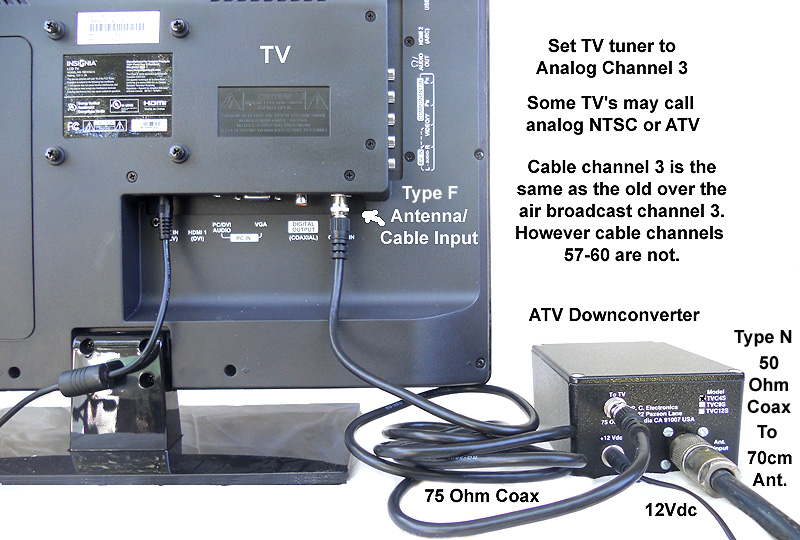
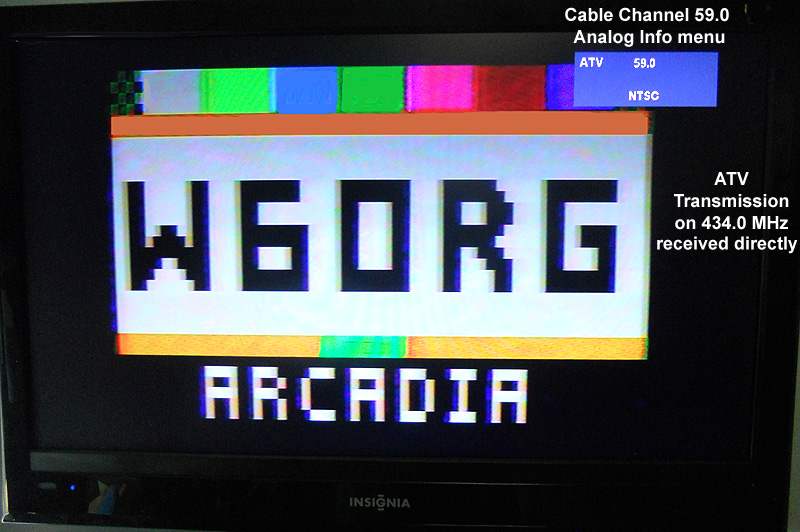 Have a close by ATVer transmit a picture to you or come over with a low power transmitter to help you set up your TV. Most TV's since 2008 have to go through a set up scan looking for active over the air or cable channels. The tuners in the TV's sold in the USA are required to work with analog as well as digital signals. Connect your TV to an outside 70cm antenna with the same polarity as used by your areas ATVers and run the scan for the signal. You can talk back on two meters - usually 144.34 or 146.43 simplex to line up antennas and make the tests. If successful, you will hear them on the sound subcarrier coming out of your TV speaker. It does not get any cheaper than this to check out the ATV action. The TV 75/50 Ohm coax-antenna miss match is negligible and you can use a